Showing posts with label julian barnes. Show all posts

Thursday, 3 June 2021

Assignment 13 - New Literatures

Department of English

Maharaja Krishnakumarsihnji Bhavnagar University


Written Assignment – Paper 13

Unreliable Narration in ‘The Sense of an Ending’


Name: Rohit Vyas

Semester 4

Roll No: 19

PG Enrolment Number: 2069108420200041

E-mail: rohitvyas277@gmail.com

Course: M.A. English (2019-21)

Paper 13 – New Literatures, Unit – 2


Introduction


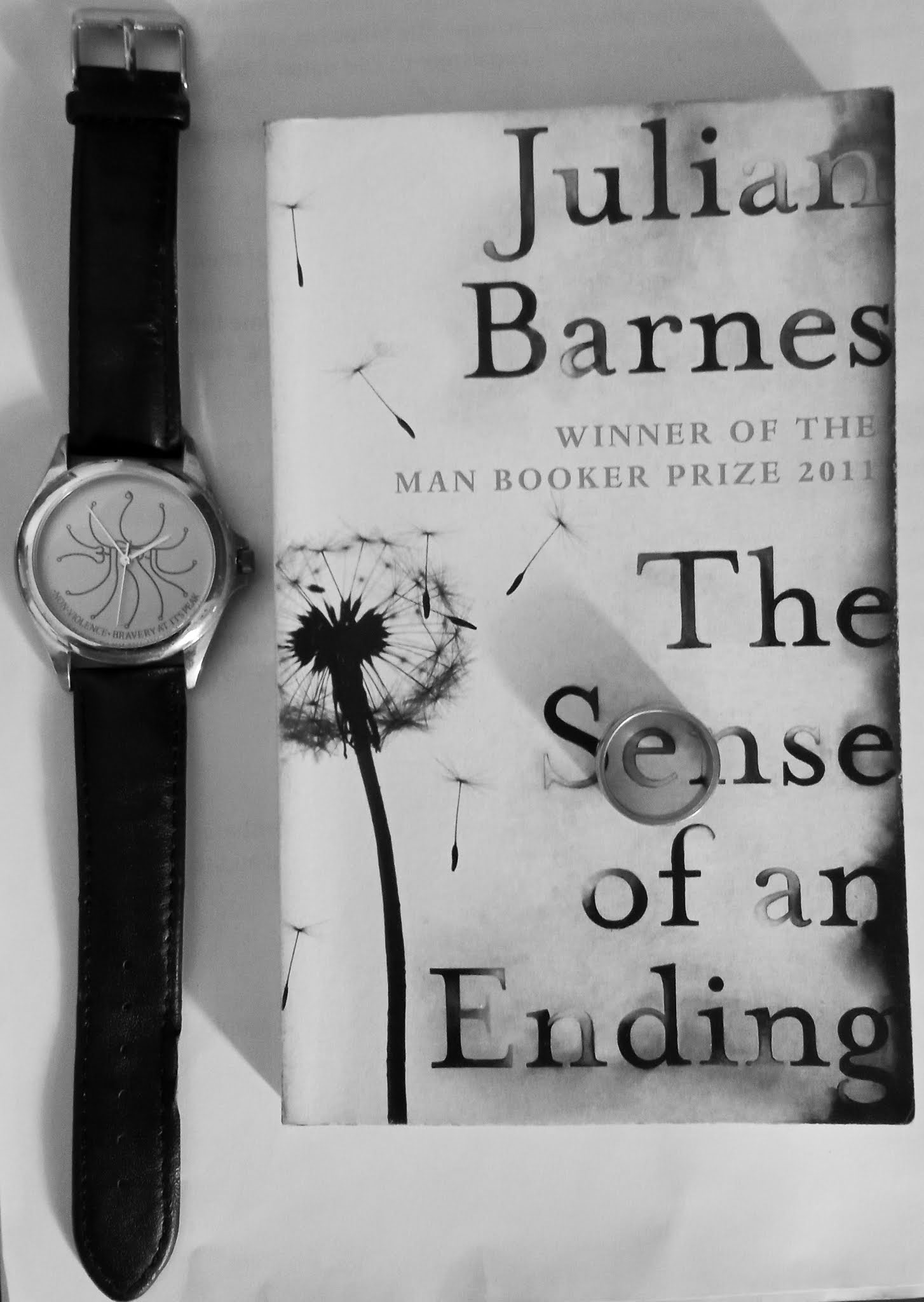
The Sense of an Ending is a postmodern novel written by Julian Barnes in 2011. The book received The Man booker Prize in literature in the same year. The author Julian Barnes has written this novel keeping in mind of the young audience. It can be said that it’s a YA fiction – which stands for Young Adult fiction.


The title of the novel is taken from Frank Kermode’s book with the same name, The Sense of an Ending: Studies in the Theory of Fiction. It holds the detailed study of modern fiction and its contemporary usage in literature.


The novel is divided into two parts, ‘One’ and ‘Two’. It holds the sharpness of language with brevity. As if Barnes has enlivened the quote – “Brevity is the soul of wit”. The matter-of-fact writing style is one of the iconic of Barns’ writing styles. Apart from the positive critical reception of the novel, it also holds some drawbacks.


The novel sets up in the USA, where, three Science Sixth school friends, Tony Webster, Colin, and Alex make a promise for a life-long, friendship. The protagonist, Tony Webster recalls his memories of his meeting with Adrian Finn and his encounter with Veronica Ford.


However, the first-person narration of the novel seems very unreliable due to several reasons like first-hand tempering of the memory element, compromising the philosophical thoughts with past by the protagonist, so on and so forth.


Where it all begins…


It would be more agreeable to argue about the unreliability of the narration by first putting a quote:


... then the Last Judgment begins, & its Vision is Seen by the Imaginative Eye of Every one according to the situation he holds. – BLAKE


To elaborate the quote regarding the present novel, the notion of thinking about the characters and their context differs from reader to reader. Blake talks about the Last Judgment in a different context and the vision which is to be seen by the people at large is going to be very fictional and imaginative, a bit at length away from reality. So here, in this novel, how Tony is narrating the story of his past younger days is much unreliable.


To cite a few quotes from the original text, can prove the narrative technique on its own.


I remember, in no particular order (Barnes, 3)


The first initial line itself defines the unreliability of the narration; if the narrator doesn’t remember in any particular order, readers may raise doubts and questions about the forthcoming pages and events. But as a postmodern novel, it is open to interpretation and questions.


Positively looking at the unreliability of the narrative technique, one can presumably ponder a bit deeper in the arena of what T S Eliot has mentioned as The Theory of Depersonalization, in which the author has to remove the personal experiences and detach itself from the very content.


Here, a quote by Umberto Eco would be applicable:


"A narrator should not supply interpretations of his work; otherwise he would not have written a novel, which is a machine for generating interpretations."

— Umberto Eco, postscript to The Name of the Rose


Moreover to the quote, the novel has much more to do with autobiographical aspects, as it already seems. Tony Webster sometimes clarifies what he wants to say by tempering his memory by going in his past.


The use of negative sentences gives more weight to the unreliable tone. Here it goes as:


I’m not very interested in my schooldays, and don’t feel any nostalgia for them. But school is where it all began, so I need to return briefly to a few incidents that have grown into anecdotes, to some approximate memories which time has deformed into certainty. If I can’t be sure of the actual events any more, I can at least be true to the impressions those facts left. That’s the best I can manage. (Barnes, 4)


Readers’ dilemma…


         The novel begins with hyphens. As a postmodernist text, ‘The Sense of an Ending’ has an ample amount of hyphens to connect the dots between fragmented memories. There are some markers also that signify the loose cohesion between the first and the second part.


         Readers may get confused and mislead when they reach half way round the novel. The fragments of the memory are as follows.


         —a shiny inner wrist;

—steam rising from a wet sink as a hot frying pan is laughingly tossed into it; —gouts of sperm circling a plughole, before being sluiced down the full length of a tall house;

—a river rushing nonsensically upstream, its wave and wash lit by half a dozen chasing torchbeams;

—another river, broad and grey, the direction of its flow disguised by a stiff wind exciting the surface;

—bathwater long gone cold behind a locked door. (Barnes, 3)


Here are the markers where readers get confused. Secondly, the narration begins with a deep philosophical excerpt that lead the readers in time, space and its malleability. The questions are automatically answered in the trajectory of the narration but one has to refer to the first page again and again for connecting the dots.


Julian Barnes as a postmodern author, has aptly used the subjectivity for Tony Webster. Where Tony himself finds the memory very tempered at the age of sixty. He recalls the incident of meeting Veronica and her family at her home, and comes across the word ‘damage’. He questions himself:


What did I mean by “damage”? It was only a guess; I didn’t have any real evidence. But whenever I looked back on that unhappy weekend, I realised that it hadn’t been just a matter of a rather naïve young man finding himself ill at ease among a posher and more socially skilled family. (Barnes, 43)


When one does any work or task with utmost consciousness, one doesn’t need to clarify their decisions, actions and give justifications to anyone. If so happens it becomes shallow to discuss or further the story. But here the unreliability comes up when Tony elaborates the word ‘damage’:


When I wrote to Adrian, I wasn’t at all clear myself what I meant by “damage.” And most of a lifetime later, I am only slightly clearer. (Barnes, 43)


The Question of Accumulation


How could an individual conclude any of such unreliability when it comes on the table of the postmodern fiction? Though it’s agreeable that the modern angst leads to the generation of the anxious, autobiographical literature which possibly may hold some looseness in their prose but here the prose style is matter-of-fact yet it’s unreliable. As Adrian Finn points out several integers and makes some equations out of the real life experiences, one can possibly put an analogy of the accumulated points. But one has to be careful in making any opinions from the face value of anything.


'The falseness of an opinion is not ... any objection to it,' says Nietzsche, adding that the only relevant question is 'how far the opinion is life-furthering, life-preserving, species-preserving.' (Kermode, 50)


Here, we can conclude that the novel contains unreliable narration with unsuitable fragments that make some disposition in reader’s mind. Yet the novel stands as one of the milestones of the postmodern fiction. It suggests multiple interpretations to unfold and encourages readers to question the content, context, characters and narration.


Works Cited


Barnes, Julian. The Sense of an Ending. Vintage, 2011.

Fish, David. "Book Review: The Name of the Rose by Umberto Eco." Medium, 16 May 2017, dsfish.medium.com/book-review-the-name-of-the-rose-by-umberto-eco-265be0c09e79.

Kermode, Frank. The Sense of an Ending: Studies in the Theory of Fiction with a New Epilogue. PDF, Oxford UP, USA, 2000.


Thursday, 22 April 2021

The Sense of an Ending Group Task

Hello Readers !

Here is the video presentation made by our group in which 5 students worked on the various aspects and devices of the novel. We recorded the series of the videos and presented in the hybrid lectures.


THE SENSE OF AN ENDING – GROUP TASK

1. Author's Introduction - Julian Barnes


2. Novel's Introduction


3. Structure 


4. Setting

5. Characters

6. Plot of 'The Sense of an Ending'


7. Themes

8. Symbols

9. Title Significance


10. Film Adaptation


11. Learning Outcome - Rohit


Additionally, my following analogy about the novel is something which everyone, specifically youngsters who are assumed as cream of every society, must read and apply. So here it goes.

I raise my anger on Tony's character. Not because of what he did in his younger days, but because of why he didn't do the things which were necessary to do when he was young. Instead of envying Adrian's clarity of life, Tony could have exercised to make himself clear about his own false assumptions.

I pity him. Because in his sixties, the decades in life which should be lived peacefully, he had to experience "the great unrest". I pity him for his remorse and regret. Because it has no significance. He has wasted his 'time' and has lived a bit careless life being young. Later in life being apologetic is of no use, especially when he knows nothing about Veronica's life, her relationship with Adrian. It's always better to bear and work on our 'unrest' than the 'great unrest'.

Karmic Philosophy and Theory of Relativity

If I look at my past Karmas, ranging from recent past times to many years back, there's always something which I have some sad feeling, or regret for. There has been time in which I submerged myself into deep solitude, and there has also been the time when I have found myself highly engaged with the crowd. What difference these two situation have is, they both don't exist without my consent. Being in solitude may not give me happiness and being in crowd may not. 

Well, this doesn't make me a believer in Karmic philosophy but a practitioner of rational thinking. Because whatever we think, whatever we perceive as a reality, we become likewise. We might not have shared our thoughts everytime but they definitely leave their impressions in an individual's life. Sometimes they causes tremendous pain or sometimes they create pleasure. On the whole, it's a relativistic idea of thinking.

---: Knowability :---

If I'm not aware of the basic facts about something, I must not create any assumptions or hypothesis on any idea. No matter how that thought or idea pressurizes me to materialize it into action and into language. Instead of forcing outworldy entities to get me to the fact, I must practice individualism. The more we set ourselves at the centre of the subject, the more we become open to the knowledge which would fall into our place, without any effort.

---: Consciousness :---

Actions speak louder than language. Our actions bring the positive and negative feedback from people at large. So, the more we become conscious about ourselves, the more peaceful surrounding we recieve.

If 'The Sense of an Ending' puts the core message of giving mutual spaces to one another, it also gives the impression of taking all the possible responsibilities of actions, languages, and even 'thoughts' (yes, even if the last one is never visible to anybody on the Earth.) Hence, if my mere existence is philosophically self evident (yes, that's the humorous way of looking at such brightest gems of thoughts) I must relook, reread, and analyse all of my past actions, words, and thoughts being skeptical about it and by asking questions to myself, I must put all the possible efforts to make everything clear. I must acknowledge and accept all of my guilt, regrets, and past actions, good and bad experiences and remain true to myself.

Yes, here's the point when the subjectivity and objectivity matter the most. I'm no one to judge someone else's behaviour, decisions and thoughts. If I get myself actively involved into others matters, I may ruin my individual positivity. While doing formal interaction with others, one has to be objective in order to maintain the decorum.

Consciousness, the key to actively witness all the actions and events, is a remedy to our confusions and dilemmas of life. The more conscious we become in our actions the more we become aware about the outcomes and results.

-----

I found this novel highly meditative. It would be excessive to call Tony Webster an overthinker. Though he made his every effort to clarify and justify his mistake, but he couldn't. He didn't give up on the idea of seeking the truth.

As a practitioner of Yog and meditation, my meditation never allows me to be something which I'm not. Meditation has always played a key role and has been a loyal friend to me in all walks of life. With my meditation and reading this novel, I happen to emerge myself as a new version. If the collective motto of life is to acquire happiness and peace, all the initials lie in Yog and meditation.

Some ideas and thoughts come with uncontrollable thrust whenever they strike. If any of my readers are poets, painters and writers, they might have experienced it and could relate. The keen and sharp thoughts which brood into our subconscious, find a direct way through either brush, pen, pencil or keyboard, surpassing our entire consciousness.

But there's always a way to channelize such outbursts and flow. Sometimes I fail to channelize them, and sometimes I succeed. In such situations what activity we choose is vital to see.

I'm telling this because I have experienced such outbursts several times, but to name a single, it was on fortnight of the virtual annual day function in which I have written the following poem with flow of emotions.

Click Here to read my poem titled :
"March 8th 2021"

Enjoyed?

Such is a situation, if this flow is channelized properly, it can create some productive work, build a new social standard... and similarly can destroy many beautiful things and relations. I remember the dialogue from the film Andhaadhun,

"What is life? That depends on the liver."

To me, life is an ocean, water is salty, we can't drink. But what we can do is swim, to keep treading water with all the energy we have. Someday I may get tired of swimming, but I can't let myself drowned in the dark depths. Keeping myself utmost postive, accepting all the challenges, fighting the odds, one day... the journey will find its destination.

- Rohit Vyas

12. Learning Outcome - Ruchi


13. Learning Outcome - Kavisha


14. Learning Outcome - Dharti
15. Learning Outcome - Dhara

Videos will be updated soon.

Click here to read the detailed social media post about our group activity.

Thank You!

The Sense of an Ending - Thinking Activity

Hello Readers!

How often do we recall our past? Do we really narrate our memories with neutral point? What happens when certain memories flash up in mind and becomes unbearable? Do our memories shape our present self? If yes, then how much justifiable that self is?

Well, such questions largely focus on our own psyche and our own real self. We represent lot many persons in one. For example, at school we carry some responsibilities as student, teacher, principal so and so forth. Among friends we are different from work place, we remain much free and informal among friends. At office we are either a boss who strictly scolds the employees or either an employee who sincerely works and gives best out of anything.


This blog is a thinking activity assigned by our teacher Dr Dilip Barad sir. Click here to visit the teacher's blog with detailed questions.


(II) A general critique of the novel

The Sense of an Ending is the novel written by Julian Barnes and published in 2011. It is critically acknowledged as a masterpiece of the postmodern fiction. The novel has much complex style of writing yet it holds the subtlety of thoughts. 

(III) Study of film adaptation


The film holds very lose context and connection with the original text.